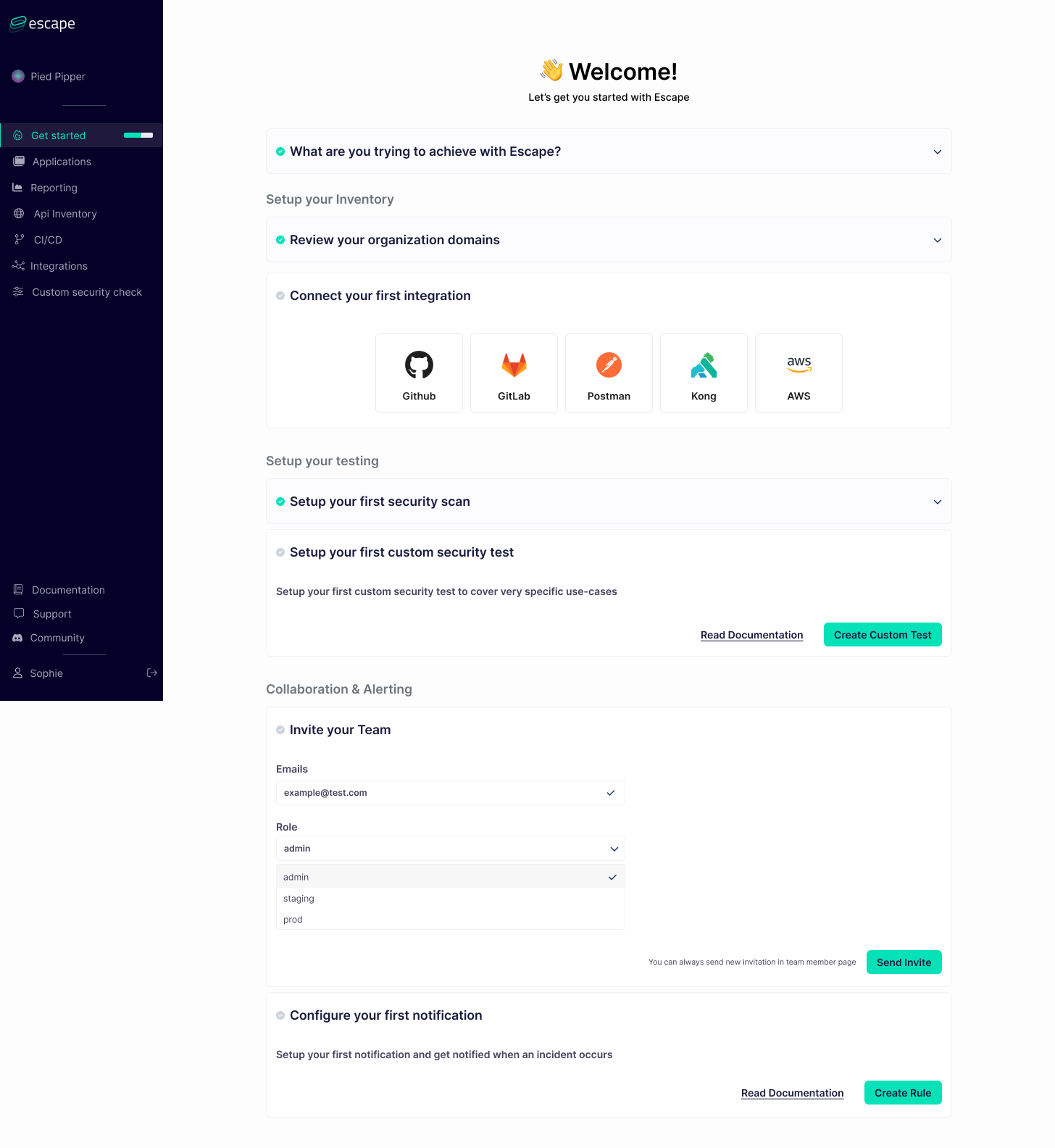
When designing a product, it's easy to focus on the interface. But in complex B2B environments, the real challenge lies elsewhere. A product doesn't live on a screen, it lives inside an ecosystem.
This is exactly what I worked on as Founding Product Designer at Escape, a cybersecurity SaaS built for technical teams.
From tool to workflow integration
Escape is not a standalone product used occasionally. It is deeply embedded into the daily workflow of developers, security teams, and companies shipping code continuously.
Understanding the real user journey
A typical user is not "using a cybersecurity tool". They are writing code, shipping features, reviewing pull requests, fixing bugs. Security is just one part of that flow.
So the question wasn't "How do we design a good interface?", but
"How does Escape fit naturally into the way teams already build and ship software?"
A product embedded in the development lifecycle
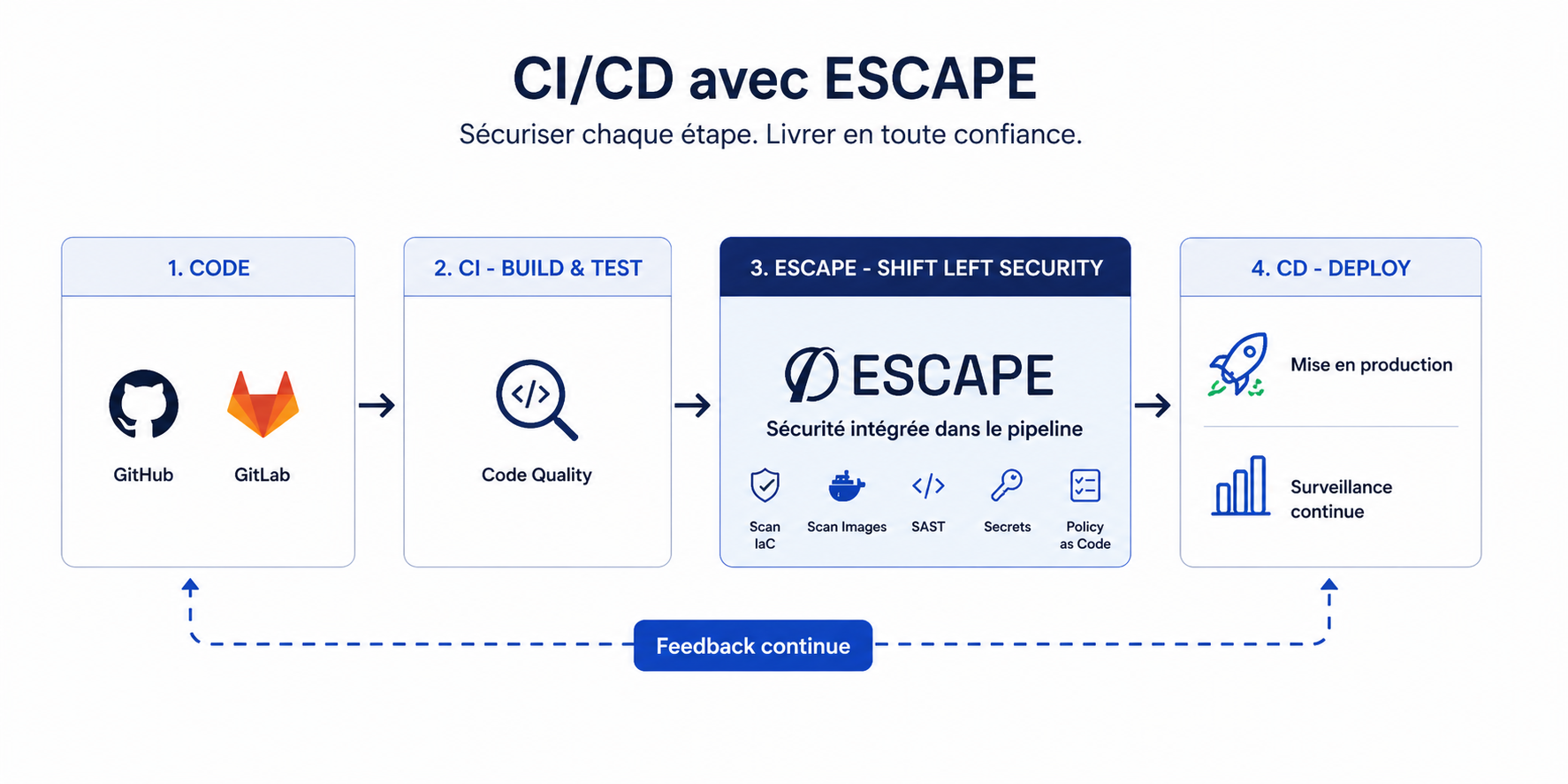
1. Continuous scanning within CI/CD
Escape integrates directly into the CI pipeline. When a developer ships a new feature, a security scan is automatically triggered. No extra step, no context switching. Security becomes part of the delivery process, not a separate task.
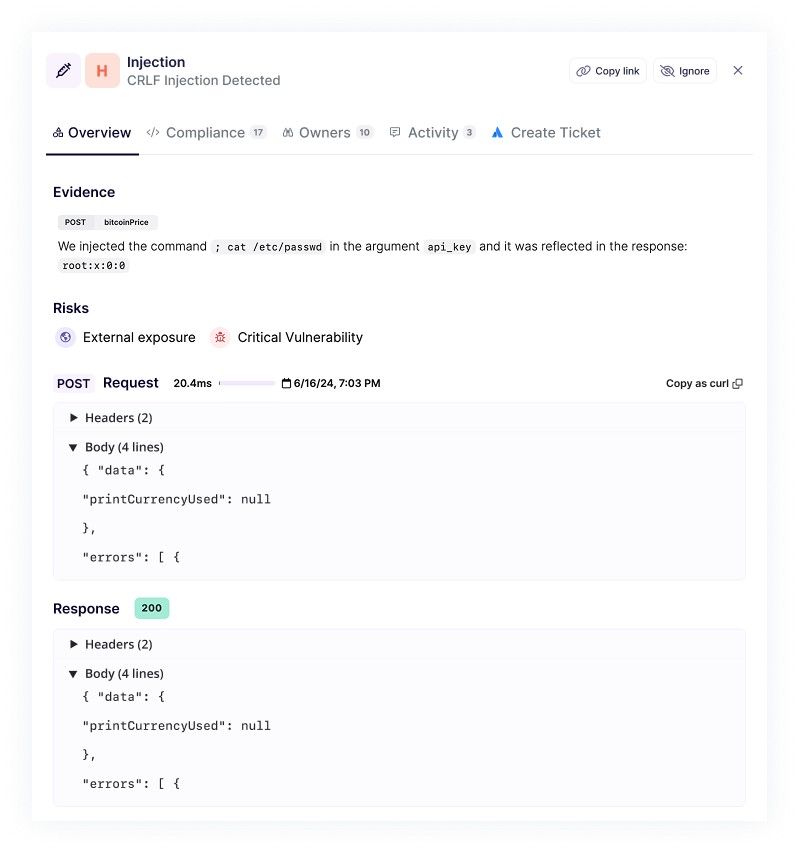
2. From issue detection to actionable insight
When a vulnerability is detected, a link is generated and the developer is redirected into Escape product. They don't see raw data, they see a clear explanation of the issue, its impact, and most importantly how to fix it. Turning complex security data into actionable decisions was one of the central design challenges.
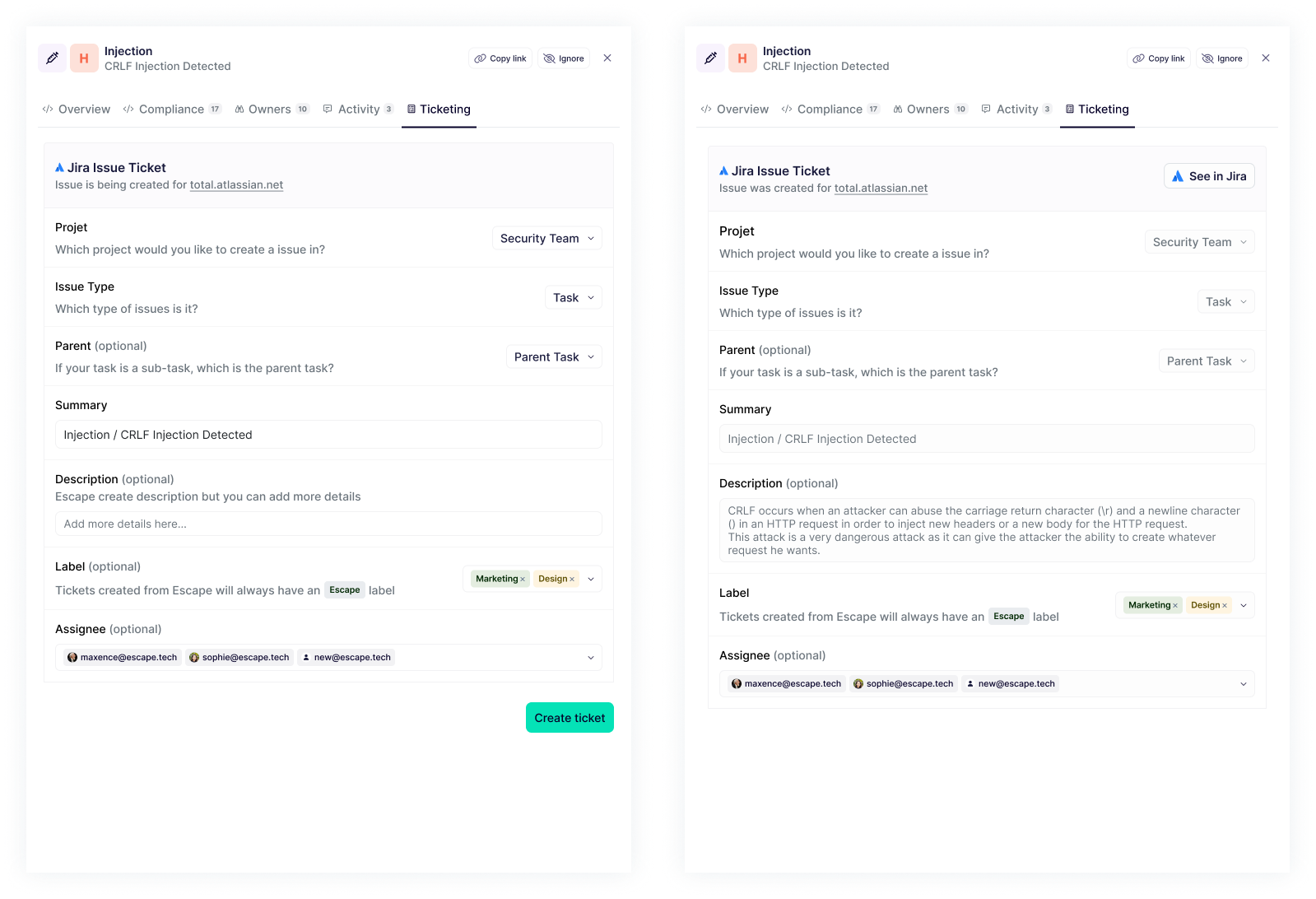
3. Integration with existing tools (Jira)
Fixing an issue should not break the workflow. From Escape, users can create a Jira ticket directly, assign it, and integrate it into their existing backlog. Escape doesn't replace tools — it connects them.
4. Supporting two personas: developers → CISOs
Developers need fast, clear, actionable feedback. They want to fix issues without friction. Security teams and CISOs need visibility and the ability to track progress over time.
To serve both realities:
- detailed issue views for developers,
- and a monitoring dashboard for security leaders (number of vulnerabilities, resolution status, evolution over time)
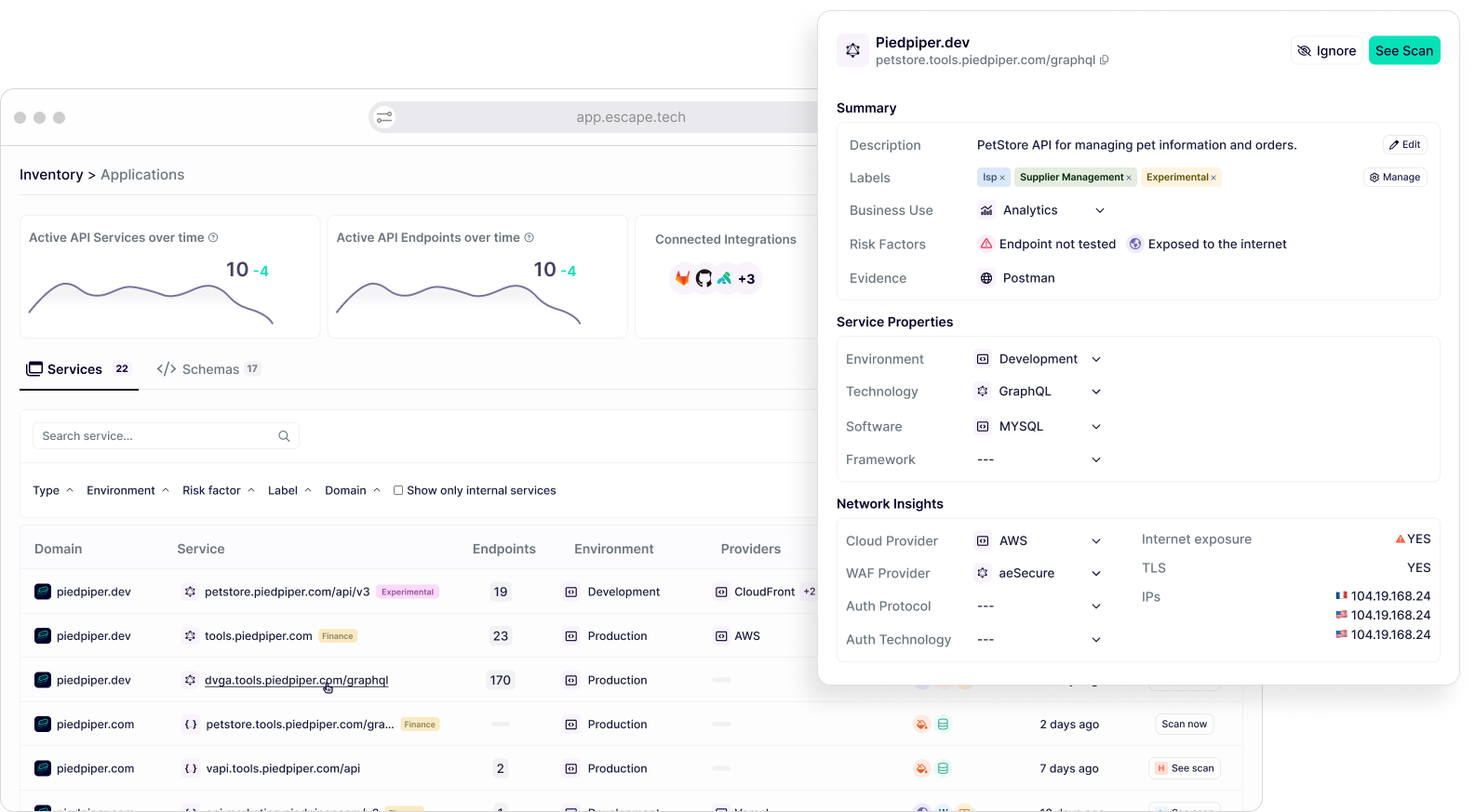
Designing for systems, not screens
One of the key challenges was handling complexity: APIs, technical data, multiple integrations, different user roles. The goal was never to simplify the system itself, it was to make it understandable and actionable.
Discovery, design system and impact
To make the right decisions, we stayed close to users:
- a Discord channel to interact directly with active users,
- regular interviews,
- and continuous feedback loops.
This allowed us to identify friction points early, validate assumptions quickly, and iterate fast in a startup environment.
As the product grew, we also built a design system integrated with Storybook, to ensure consistency across the product, accelerate delivery, and create a shared language between design and engineering.
Building a complex B2B product?
30 minutes to talk about your product integration challenges and user adoption strategy.